
 EN
EN
 EN
EN FR
FR ES
ES PT
PT AR
AR
Travertine vs Marble Dining Tables: Which Is Better for Luxury Interior Projects?
Travertine and marble are two of the most popular natural stones used in luxury dining tables. Both materials offer timeless beauty, strong design character, and long-term value, but they create very different moods in an interior project.
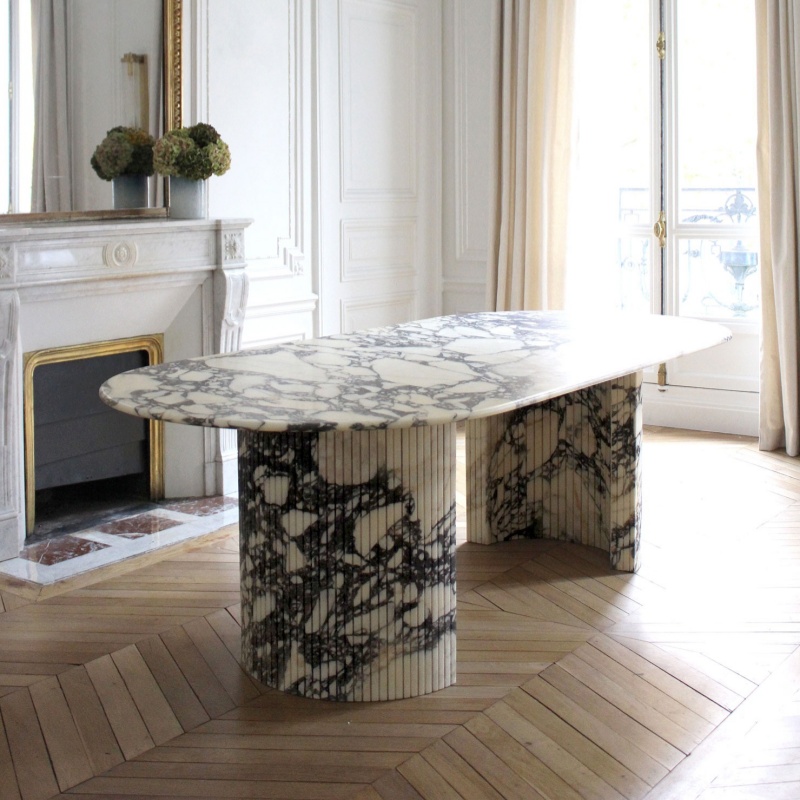
Marble dining tables are often chosen for dramatic veining, refined contrast, and a high-end visual statement.
For interior designers, hotel buyers, villa owners, and furniture importers, the choice between travertine and marble should not be based only on appearance. The right material depends on the design concept, project setting, usage frequency, maintenance expectations, and the atmosphere you want to create.
Choose marble if the project needs a refined, polished, and visually striking centerpiece. Choose travertine if the space needs a warmer, softer, architectural, and natural look.
1. What Is the Main Difference Between Travertine and Marble?
Marble is a metamorphic stone known for its elegant veining, smooth surface, and luxurious appearance. It is often used in high-end dining tables, coffee tables, vanities, hotel lobbies, and statement furniture pieces.
Travertine is a type of limestone with a naturally porous texture and warm neutral tones. It is commonly used in architectural interiors, villas, resorts, Mediterranean-style homes, and contemporary spaces that need a softer natural character.

Natural stone selection affects color, texture, maintenance, and the final mood of the dining area.
2. Visual Style: Polished Luxury vs Warm Architectural Texture
Marble dining tables usually feel more formal and expressive. Stones such as Calacatta Viola, Nero Marquina, Arabescato, and green marble can create strong visual impact. This makes marble a strong choice for formal dining rooms, hotel suites, luxury apartments, and interiors where the table needs to become the focal point.
Travertine dining tables have a quieter and more organic look. The soft beige, cream, or warm grey tones work well with wood, linen, bronze, plaster walls, and neutral interiors. Travertine is often preferred for relaxed luxury spaces, resort projects, and villas where natural texture is more important than dramatic contrast.
3. Travertine vs Marble Dining Table Comparison
| Factor | Marble Dining Table | Travertine Dining Table |
|---|---|---|
| Visual Effect | Elegant, polished, dramatic, luxurious | Warm, natural, calm, architectural |
| Best Project Style | Luxury apartments, hotel suites, formal dining rooms | Villas, resorts, neutral interiors, organic modern spaces |
| Pattern | Distinct veining and stronger contrast | Softer movement and natural texture |
| Surface Feeling | Smooth, refined, often polished or honed | Textured, warm, often filled and honed |
| Maintenance | Needs careful cleaning and protection from acidic liquids | Needs sealing and attention to porous areas |
4. Which Stone Is Better for Hotels and Commercial Projects?
For hotels, restaurants, and serviced apartments, both marble and travertine can work well, but the decision should match the brand atmosphere and usage level.
Marble is a strong option when the project wants a more premium, formal, and memorable impression. It works especially well in luxury hotel suites, private dining rooms, and high-end restaurant interiors.
Travertine is ideal for hospitality projects that want a relaxed, warm, and natural feeling. It is often suitable for resorts, boutique hotels, wellness spaces, and interiors that use neutral colors and natural materials.
Buyer Tip
For commercial projects, confirm the stone finish, sealing method, edge profile, base support, packing method, and cleaning requirements before production.
5. Which Material Is Easier to Match With Interior Design?
Travertine is usually easier to match with warm minimalist interiors because its tone is soft and natural. It works well with oak, walnut, brushed metal, cream fabrics, beige stone, and plaster finishes.
Marble offers more visual variety. White marble creates a clean and elegant feeling. Black marble adds contrast. Green marble creates a strong natural statement. Calacatta Viola brings artistic movement and a distinctive luxury look.
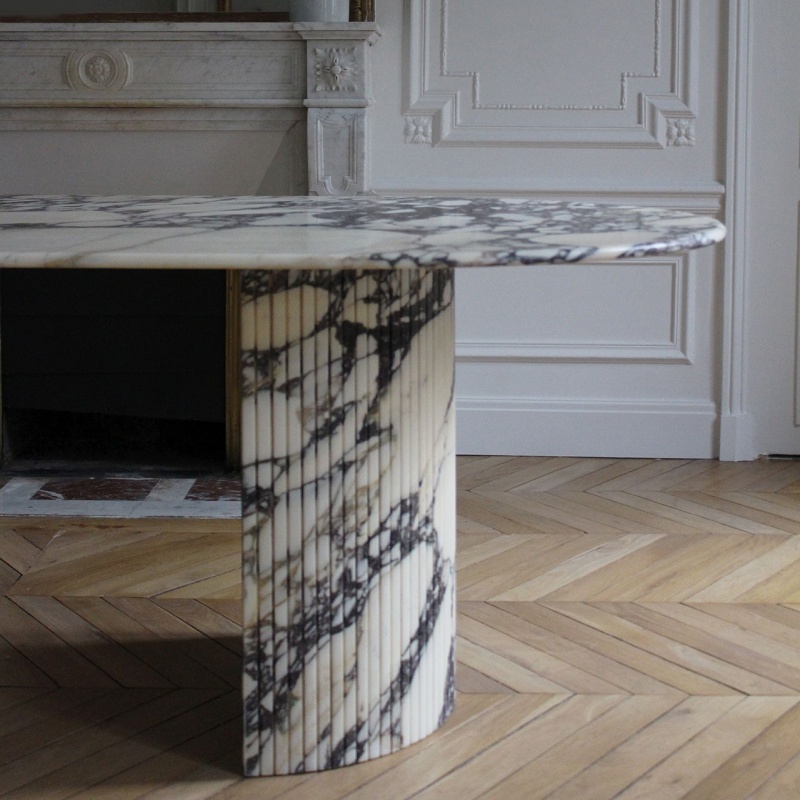
Strong marble veining can turn the dining table into a clear focal point within the room.
6. Maintenance: What Should Buyers Know?
Both travertine and marble are natural stones, so proper care is important. Neither material should be cleaned with strong acidic chemicals. Wine, coffee, lemon juice, vinegar, and oily stains should be cleaned quickly.
- Use coasters, placemats, and soft cleaning cloths.
- Choose a pH-neutral cleaner for daily cleaning.
- Confirm whether the stone should be sealed before use.
- Avoid abrasive pads and harsh chemicals.
- For commercial use, ask for care instructions before delivery.
If the project requires frequent use, the surface finish and sealing process should be discussed before production. A honed or filled finish may be more suitable for some travertine tables, while polished marble may be selected when a more refined look is required.
7. Customization Options for Travertine and Marble Dining Tables
A custom natural stone dining table can be made according to the project size, room layout, seating requirements, and design concept. Common customization options include table shape, stone type, edge profile, surface finish, base design, and overall dimensions.
Popular shapes include round, oval, rectangular, and custom curved forms. For larger tables, the base structure is especially important because natural stone is heavy and needs proper support.
MARS Home Decor offers custom natural stone furniture for residential and commercial projects, including marble dining tables, travertine tables, coffee tables, side tables, console tables, vanities, pedestal sinks, bathtubs, and accessories.
To explore more natural stone options, visit the Materials page. To learn about customized production, visit Custom Fabrication. You can also browse more furniture options on the Products page.
FAQ: Travertine vs Marble Dining Tables
Is travertine good for dining tables?
Yes. Travertine is a good material for dining tables when the project needs a warm, natural, and architectural look. It should be properly filled, finished, and sealed according to the usage requirements.
Is marble better than travertine?
Marble is better for projects that need a more polished, dramatic, and luxurious appearance. Travertine is better for softer, warmer, and more organic interiors. The better choice depends on the project style.
Can travertine and marble dining tables be customized?
Yes. Both travertine and marble dining tables can be customized by size, shape, stone type, edge profile, base design, thickness, and surface finish.
Which stone is best for hotel dining tables?
For luxury hotel suites and formal spaces, marble is often preferred. For resorts, boutique hotels, and warm neutral interiors, travertine can be an excellent choice.
Need a Custom Travertine or Marble Dining Table?
MARS Home Decor can help with natural stone selection, custom sizing, production details, and project-based furniture solutions for luxury residential and hospitality interiors.
Request a Custom Quote


 Network Supported